
GPS Mapping
Precise GPS mapping is a game-changer for effective land management and conservation. At Envirogain, we use GPS technology to pinpoint weed infestations, track pest animal activity, and map revegetation areas — ensuring every action is targeted, efficient, and impactful.
With GPS mapping, our clients benefit from:
- Smarter planning – accurate maps guide tailored weed control, pest baiting, and revegetation strategies.
- Better results – ongoing monitoring shows what’s working, allowing adaptive management to maximise outcomes.
- Efficiency and precision – resources are applied where they’re needed most, saving time, effort, and cost.
- Clear reporting – detailed maps support communication, compliance, and long-term project planning.
By integrating GPS mapping into every project, we help landholders and conservation managers achieve healthier ecosystems, stronger native vegetation, and more resilient landscapes — all through data-driven, precise management.
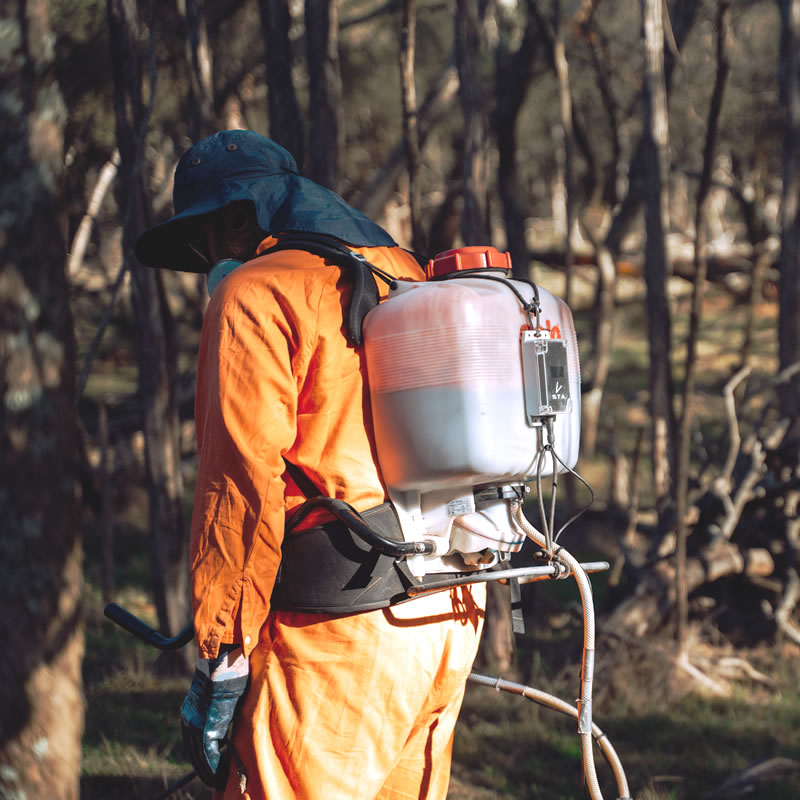
Our GPS Mapping Services Include:
- Weed hotspot identification
Quickly locate and prioritise areas of invasive plant growth for faster, more effective control. - Pest activity mapping
Track foxes, rabbits, and other pest animals to optimise baiting programs and reduce impacts on non-target species. - Revegetation zone planning
Precisely map planting areas to improve survival rates, support biodiversity, and track restoration progress.
- Operational tracking
Record and visualise team movements during weed control, pest management, and revegetation work to ensure complete site coverage and accurate reporting. - Vegetation change monitoring
Use photopoints and GPS tracking to measure growth, survival, and ecosystem recovery over time. - Wildlife and biodiversity data integration
Combine motion-sensor camera data with site mapping to guide pest management and ecological decision-making.
- Weed hotspot identification
Quickly locate and prioritise areas of invasive plant growth for faster, more effective control. - Pest activity mapping
Track foxes, rabbits, and other pest animals to optimise baiting programs and reduce impacts on non-target species. - Revegetation zone planning
Precisely map planting areas to improve survival rates, support biodiversity, and track restoration progress. - Operational tracking
Record and visualise team movements during weed control, pest management, and revegetation work to ensure complete site coverage and accurate reporting. - Vegetation change monitoring
Use photopoints and GPS tracking to measure growth, survival, and ecosystem recovery over time. - Wildlife and biodiversity data integration
Combine motion-sensor camera data with site mapping to guide pest management and ecological decision-making.